NO RESERVATIONS W/ SEANWICHES: BOGOTÁ
- SEANWICHES

- Mar 15
- 14 min read


The first thing you notice about Bogotá isn't the skyline. It's the altitude.
Step off the plane at 8,600 feet and the air feels thin, like someone turned down the oxygen just enough to remind you this city sits closer to the clouds than most places you've been. Bogotá sprawls across a massive plateau in the Andes, the Monserrate and Guadalupe peaks rising to the east like landmarks you navigate by without thinking. In a city this size, they're the one thing that doesn't move.
Founded by Spanish conquistador Gonzalo Jiménez de Quesada in 1538, Bogotá started as a colonial outpost built on land inhabited by the Muisca people for thousands of years. The Spanish saw gold, fertile land, and strategic positioning. They built a city that would become the political and cultural heart of what is now Colombia.
Churches rose beside government buildings. Cobblestone plazas became centers of commerce and rebellion. The city burned in its first decades, rebuilt with stone instead of wood, and kept growing. Waves of migration brought new cultures, new foods, new languages. What started as a colonial outpost evolved into a capital of eight million that shows no signs of slowing down.
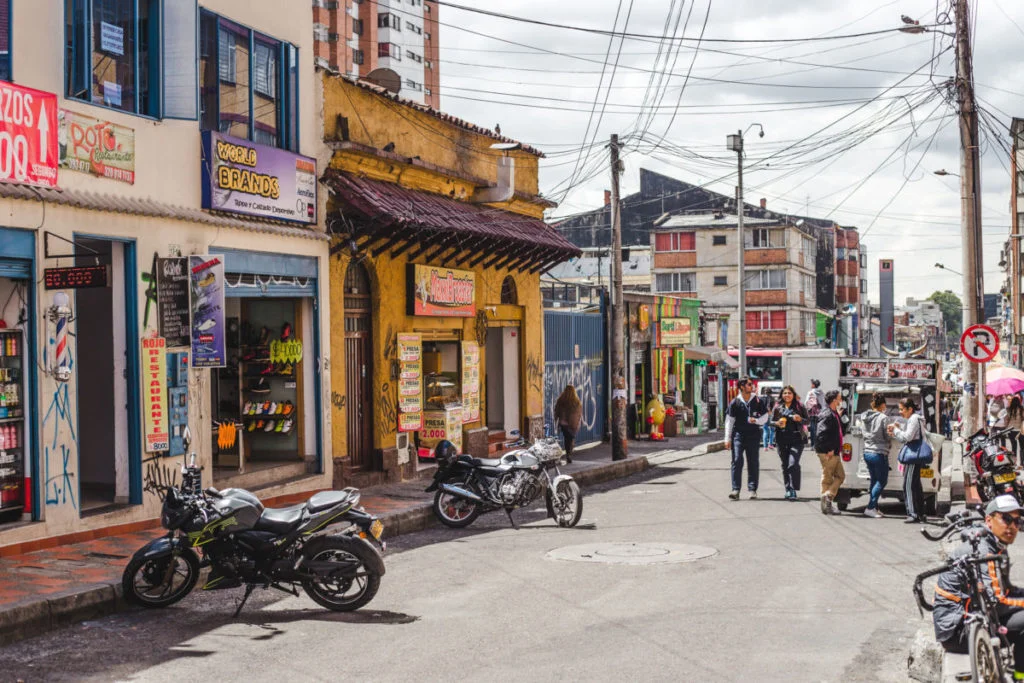
Today Bogotá is a sprawling metropolis that refuses to be just one thing. Colonial streets wind past modern glass towers. Fruit markets that smell like the entire jungle exploded in the middle of the city sit blocks from kitchens building tasting menus around ingredients from the Amazon and the Andes. Neighborhoods feel like separate cities stitched together by a web of buses, bike lanes, and an impressive public transit system that actually works.
The contrasts hit you immediately. Polished shopping districts. Street vendors grilling meat on corners. Rooftop bars with panoramic views. Street art covering entire buildings in La Candelaria. It's loud, creative, unpolished in places, and deeply alive.
If you try to see everything at once, Bogotá will overwhelm you. But if you let the day guide you, starting in the markets where the city wakes up, drifting through history in the colonial quarter, climbing into the modern creative neighborhoods, and ending where the lights are brightest, the city starts to make sense. It becomes less about checking off sights and more about moving through rhythms. And those rhythms almost always lead to something good to eat.
Moving Through the City
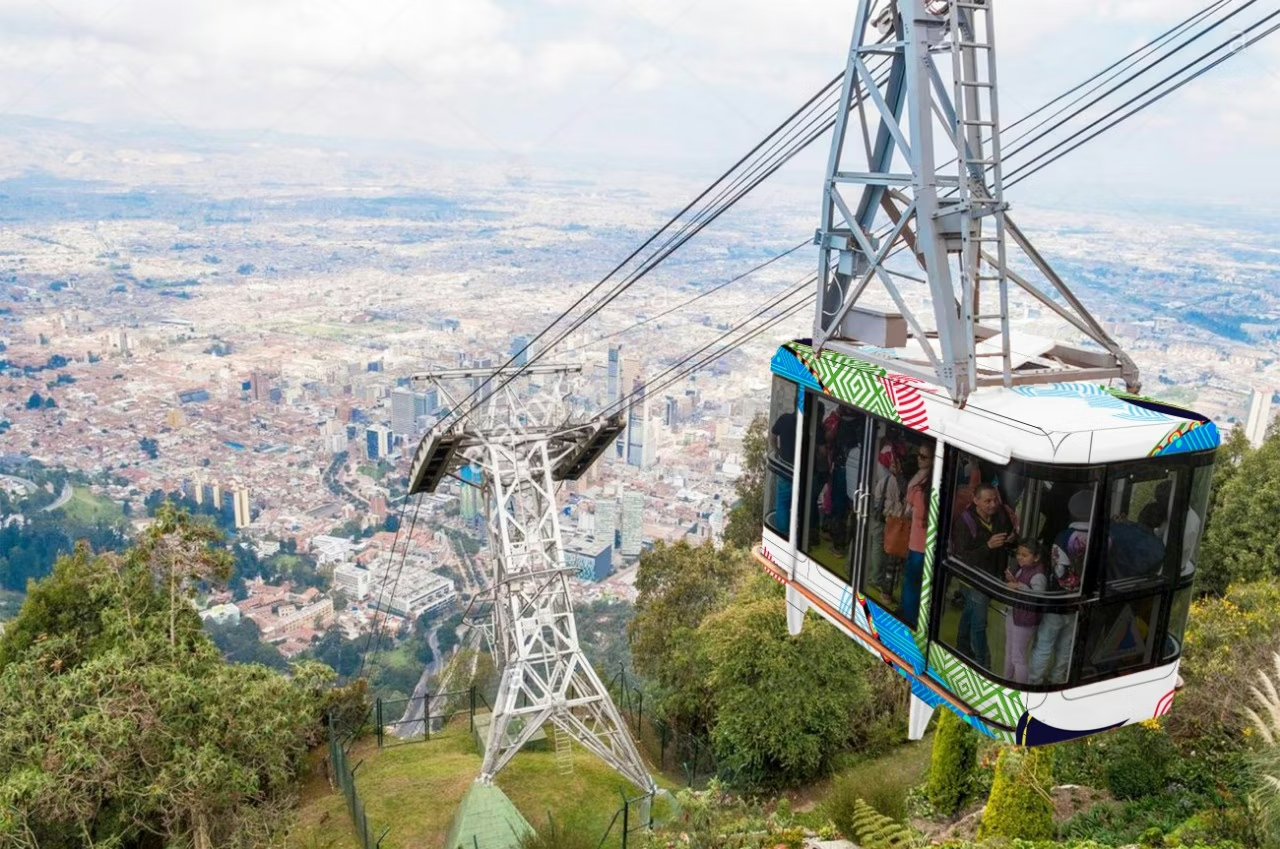
Bogotá moves. The TransMilenio bus rapid transit system cuts through the city on dedicated lanes, fast and efficient enough that you'll rarely need a car. Bike lanes crisscross major streets, and the city shuts down certain roads on Sundays for Ciclovía, when thousands of cyclists take over the streets. InDrive and Uber work well for longer trips or late nights. The cable cars up Monserrate and across certain neighborhoods offer views and transit in one. It all makes sense once you stop overthinking it.
Before the City Wakes Up
If you want to understand a city, wake up early and go where the professionals go before service starts.
In Bogotá, that means Paloquemao Market.
The place announces itself from a block away. Voices shouting prices. The smell of ripe fruit and fresh flowers hitting you before you even walk through the entrance. Inside it's controlled chaos. Mountains of mangoes stacked like they're auditioning for a still life painting. Buckets of maracuyá, lulo, and guanábana. Flowers piled so high they look like tropical fireworks ready to detonate.
Colombia is one of the most biodiverse countries on earth, and this market is where much of that biodiversity flows through the capital. You'll see fruits you've never heard of. Granadilla. Zapote. Curuba. Vendors will hand you slices to try, and suddenly you're tasting something that tastes like a combination of three other fruits that also don't exist anywhere else.
Grab a plastic stool at one of the small food stalls scattered throughout the market and order breakfast. Tamales wrapped in banana leaves and stuffed with pork, chicken, rice, and vegetables. Caldo de costilla, a beef rib soup that Colombians swear is the cure for hangovers, bad luck, and existential dread. Fresh juice made from whatever fruit looked best that morning.
It's messy. Loud. Exactly the kind of place Bourdain would have lingered for hours, talking to vendors, asking questions, ordering another round of juice just to stay a little longer.
The market opens at 4:30 AM and runs until mid-afternoon, but the best energy happens before 10 AM when the chefs are still shopping and the vendors are still shouting their best deals.



Colonial Bogotá
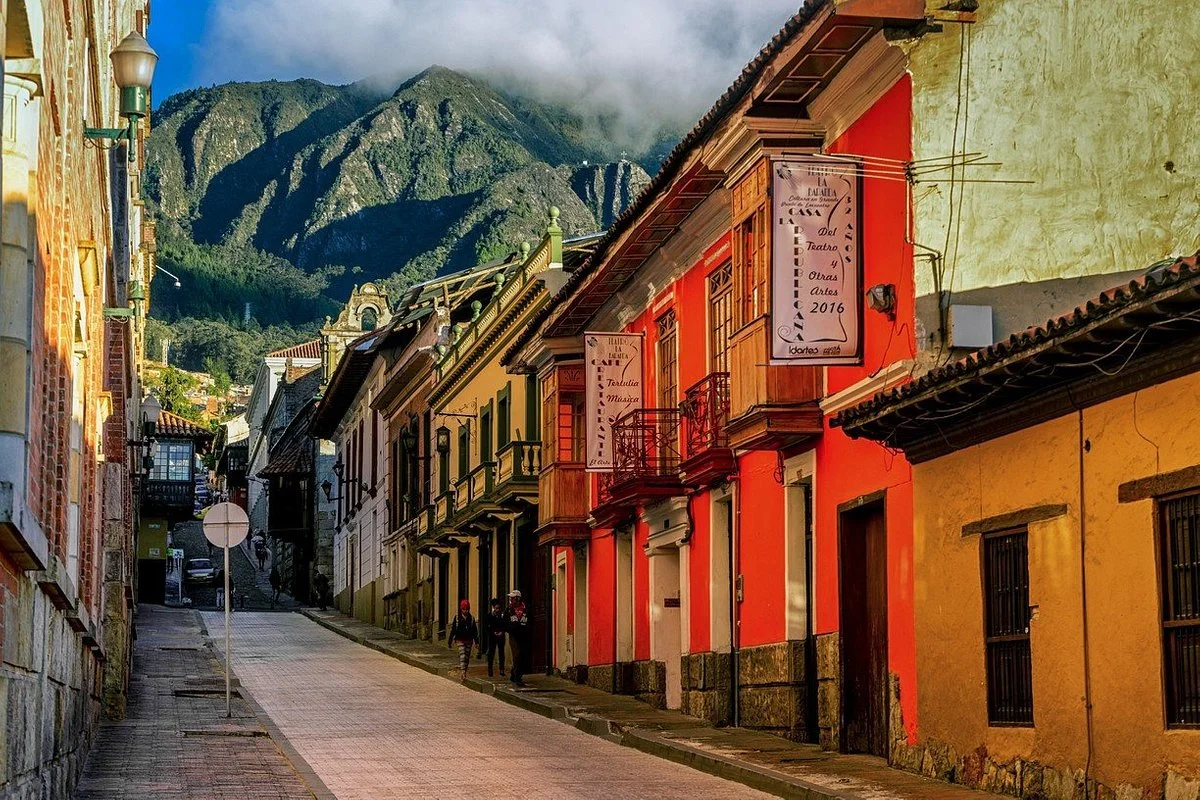
From Paloquemao, head east toward La Candelaria, the historic center where Bogotá's story began nearly 500 years ago.
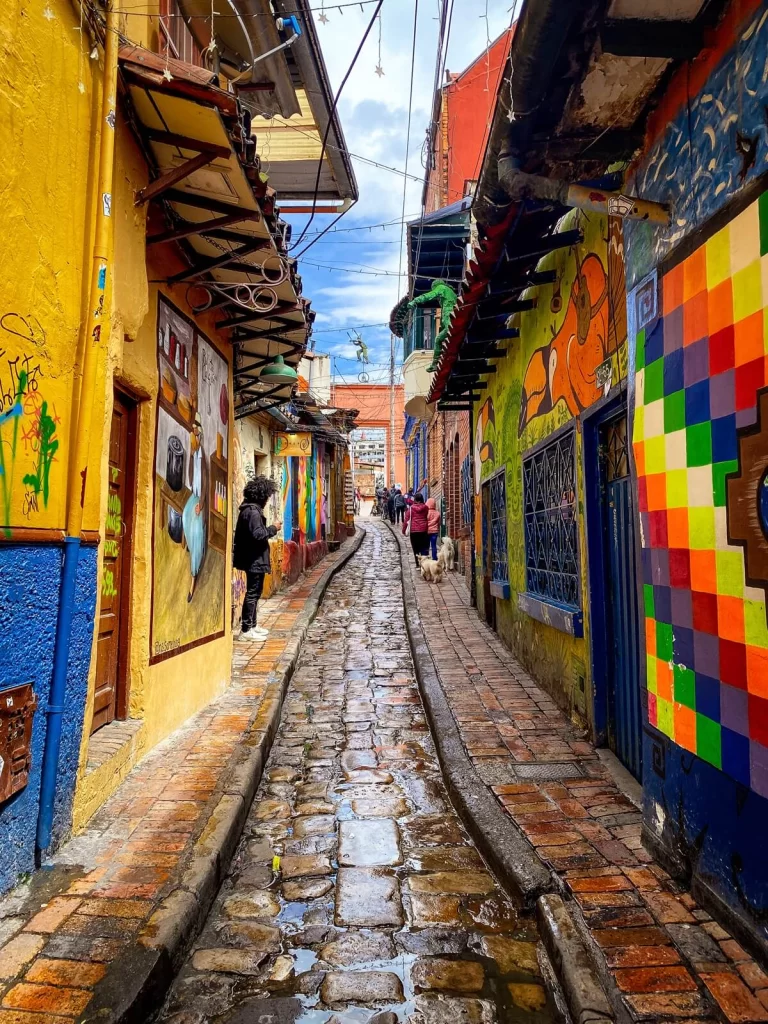
The streets narrow. The buildings shift from concrete to colonial. Bright yellow, blue, and red houses line cobblestone alleys. Street murals climb entire walls, some political, some purely artistic, all unapologetically Bogotá. Students from nearby universities spill out of cafés. Musicians play guitar in plazas. Old men sit on benches debating soccer and politics with the same intensity.
This neighborhood is the city's memory, the place where you can still see the bones of what Bogotá was before it grew into what it is today.
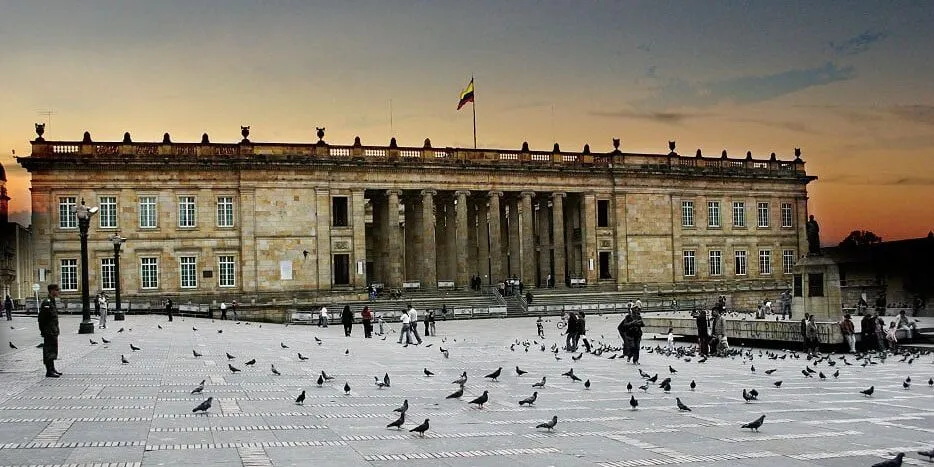
Start at Plaza Bolívar, the historic heart of the city. Government buildings surround the square. The Cathedral Basilica of Bogotá dominates one side, its neoclassical façade watching over the plaza like it has since the mid-1800s. The Capitolio Nacional, where Colombia's Congress meets, sits across from it. The presidential palace, Casa de Nariño, is a few blocks away, heavily guarded and impossible to miss.
But the real show in Plaza Bolívar is the people. Street performers juggle. Vendors sell coffee from metal thermoses. Tourists take photos of the statue of Simón Bolívar on horseback, the liberator of five nations frozen in bronze at the center of it all.
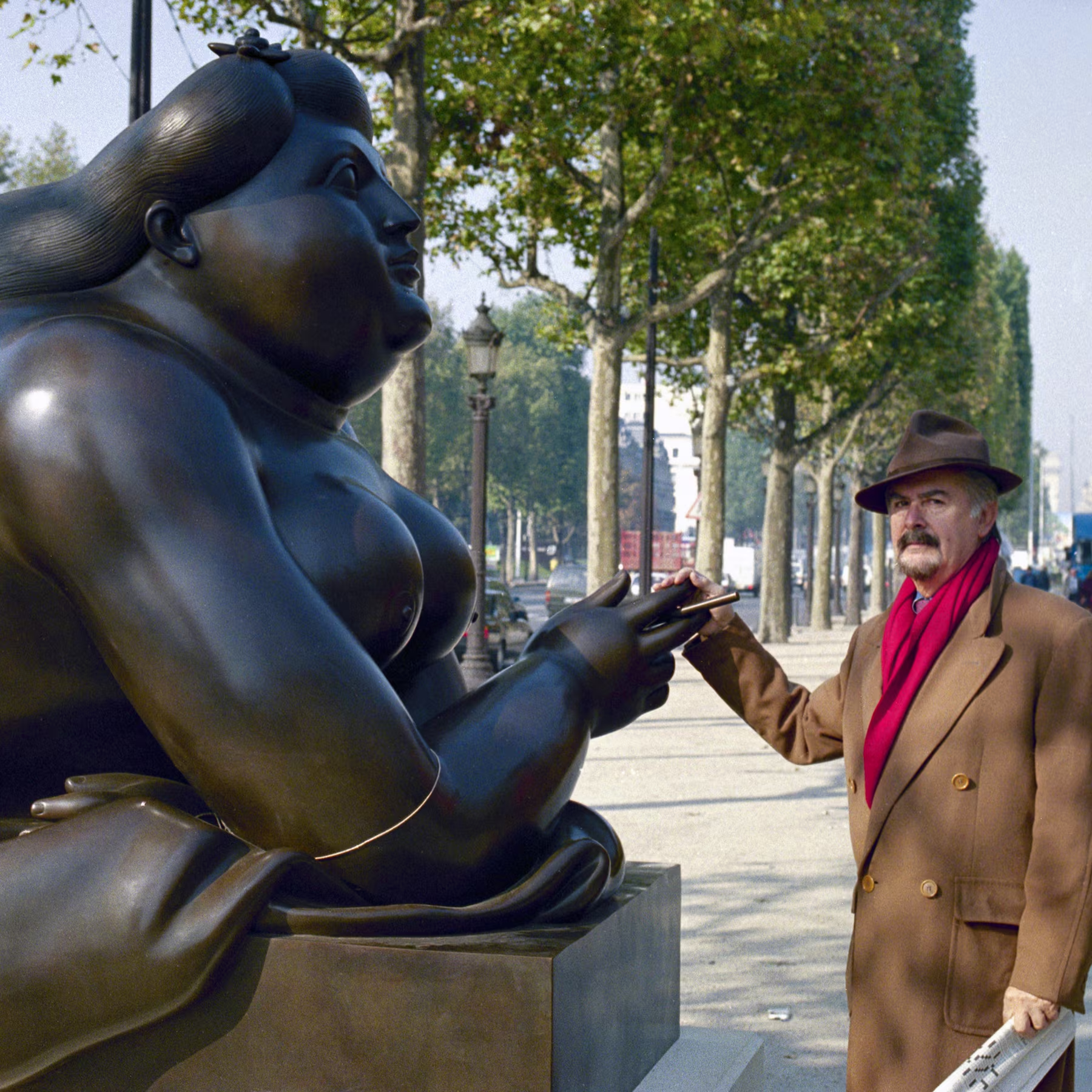
Walk a few blocks in any direction and you'll find museums that could eat entire afternoons. The Museo del Oro holds one of the most important collections of pre-Columbian gold artifacts in the world. The Museo Botero, a few blocks away, is dedicated to Fernando Botero, Colombia's most famous artist. His famously exaggerated figures fill the rooms with color and humor. The museum also houses his personal collection, including works by Picasso, Monet, and Renoir.
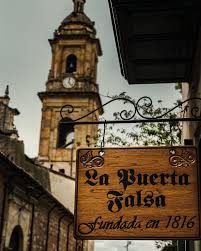
Tucked into the maze of streets you'll find small traditional restaurants that have been feeding locals for generations. La Puerta Falsa, open since 1816, serves ajiaco, a chicken and potato soup that tastes like Colombian comfort food distilled into a bowl. The space is tiny, barely bigger than a living room, and there's usually a line. That's part of the ritual.
Wander deeper into La Candelaria and you'll stumble into Plazoleta Chorro de Quevedo, a small plaza considered one of the founding sites of Bogotá. It's packed with artisan vendors, street performers, and cafés selling chicha, a fermented corn drink that dates back to the Muisca people. The plaza feels bohemian, slightly chaotic, and entirely local.
Just beyond the main tourist corridors, street art takes over. The Distrito Grafiti is less a defined district and more a sprawl of murals covering walls, alleyways, and abandoned buildings. Some pieces are political. Some are tributes to Colombian culture. Some are just beautiful for the sake of being beautiful. It's worth getting lost here for an hour.
And if you get hungry while wandering, Bogotá's street food will find you. Arepas cooked on metal griddles. Empanadas stuffed with meat and potatoes, fried until the outside cracks. Chuzos, grilled meat skewers dripping with sauce. You'll find vendors on almost every corner. Prices are low. Quality varies. Follow the crowds.




The Mountain Above the City
Everywhere you go in Bogotá, one mountain dominates the skyline.
Monserrate.
Rising 10,341 feet above sea level, the peak sits about 3,000 feet higher than the city below. At the top sits the Sanctuary of Monserrate, a church built in the 17th century that has become one of Bogotá's defining landmarks. Pilgrims have been climbing this mountain for hundreds of years, some on foot, some on their knees, all seeking something.
You can take a cable car or funicular up the steep slope, but the better option is the pilgrim trail that climbs the mountain step by step. The hike is steep, the altitude makes it harder than it should be, but the reward is a view that stretches endlessly across the plateau. Eight million lives. Millions of stories. And somewhere down there is your next meal.
The sanctuary itself is beautiful in a quiet, unassuming way. Inside, candles flicker. People pray. Outside, vendors sell hot chocolate and arepas to people catching their breath after the climb.
The mountain is also becoming known for birdwatching. The Monserrate Birdwatching Trail attracts birders looking for Andean species that live at this elevation. Hummingbirds. Tanagers. Species you won't see anywhere else in the city.
From the summit, Bogotá stretches endlessly. It's the kind of view that makes you understand why people have been climbing this mountain for centuries.
Chapinero and the New Bogotá
By the afternoon, the energy shifts north into Chapinero, the neighborhood where Bogotá's younger creative crowd has reshaped the city over the last decade.
If La Candelaria is old Bogotá, Chapinero is the new one. Coffee roasters. Independent bakeries. Cocktail bars. Restaurants experimenting with Colombian ingredients in ways that didn't exist twenty years ago.
Two sections matter most for travelers: Chapinero Alto, where cool restaurants and boutique hotels cluster together, and Zona G, Bogotá's so-called "Gourmet Zone," where many of the city's best chefs have opened kitchens within a few blocks of each other.
This is where Colombia's culinary revolution took root. For most of the 20th century, Bogotá wasn't considered a culinary capital. Colombian food was strong in home kitchens and markets, but restaurants leaned traditional or imported European classics. That started changing about fifteen years ago when a generation of chefs began looking inward, toward Colombia's biodiversity, regional cooking traditions, and indigenous ingredients.
The result is a city where you can eat indigenous tasting menus, wood-fired cooking in colonial houses, modern bistros serving natural wine, and street food that hasn't changed in decades, all within a few miles of each other. If you're going to splurge on one meal in Bogotá, make it in Chapinero.
Walk around Chapinero in the afternoon and you'll find cafés with lines out the door. By evening, wine bars start opening their doors. Cocktail lounges light up. The streets fill with people moving between spots, the energy building as the city transitions from day to night.
The Village Inside the City
Further north, Bogotá shifts again.
Usaquén started as a small colonial town outside the capital before the city expanded and absorbed it. Today it feels like a pocket of calm inside the sprawl, a place where the pace slows.
Tree-lined streets wind past cobblestone plazas. Small boutiques sell handmade jewelry and artisan goods. Cafés spill onto sidewalks where people settle in for slow afternoons over coffee and conversation.
On Sundays the neighborhood transforms. The Usaquén Flea Market takes over the streets, hundreds of vendors setting up stalls selling everything from handwoven textiles to local art, antiques, handmade crafts, and traditional Colombian snacks. Musicians play in the plazas. Families wander through the crowds. It's lively without being chaotic, the kind of market where you spend two hours browsing and leave with bags full of things you didn't know you needed.
The restaurants here lean toward cozy and romantic rather than trendy. Small dining rooms. Candlelit tables. Menus that don't try to reinvent Colombian food but do it well. It's a great place for brunch on a Sunday after the market, or a slow dinner when you want to escape the energy of Zona T and Chapinero.
Rhythm of Local Life
Between Chapinero and Usaquén sits Parque 93, a small park surrounded by restaurants, bars, and outdoor patios where Bogotá comes to relax.
The park itself is simple. Trees. Walking paths. A playground. Tables where locals play chess and dominos. It's not a destination in itself, but the area around it has become one of the more reliable spots in the city for outdoor dining and drinks.
Restaurants here range from casual to upscale, Colombian to international. On weekends the patios fill up with families, couples, groups of friends stretching brunch into the afternoon. The energy is relaxed, social, the kind of place where you grab dinner and casually drift into drinks without ever really deciding to stay longer.
Where Bogotá Dresses Up
If you want to see Bogotá at its most polished, head to Zona T.
The district sits in the heart of Zona Rosa, a pedestrian street shaped like a T and packed with bars, restaurants, rooftop lounges, and clubs. This is where the city gets dressed up. Heels clicking on sidewalks. Music spilling out of doorways. Lines forming outside clubs as the night builds momentum.
Shopping malls and high-end boutiques line the streets. International brands. Local designers. Cafés serving expensive coffee to people wearing expensive watches.
By night the area transforms. Zona T becomes a parade. People moving between spots, deciding where to land, where to stay, where to keep moving. The vibe is flashy, social, a little performative. If Chapinero is where chefs hang out, Zona T is where people go when they want to see and be seen.
Rooftop bars offer panoramic views of the city. Cocktail lounges pour drinks that arrive with smoke, fire, and theatrics. Clubs play reggaeton until the sun comes up. It's loud, bright, energetic, a reminder that Bogotá is a city that doesn't really sleep.
If you want the full Zona T experience, start at Andrés D.C., a five-story circus of live music, dancers, Colombian comfort food, and an energy that somehow keeps building all night. It's chaos in the best way, and exactly the kind of place where you stay three hours longer than you planned.


El Campín
Bogotá has three teams in Colombia's top division, but two dominate the city's soccer culture: Millonarios and Independiente Santa Fe. Both play at Estadio Nemesio Camacho El Campín, a stadium that has been the epicenter of Colombian soccer since it opened in 1938.
The stadium sits in the Teusaquillo neighborhood, west of downtown, and holds just over 36,000 people. It's not the newest, not the fanciest, but it's loud, packed, and carries a history that newer stadiums can't replicate. When Millonarios and Santa Fe play each other in the Clásico Capitalino, the entire city divides into blue and red.
On game days the neighborhood transforms. Street vendors appear selling beer, arepas, and grilled meats. Fans wearing their team colors flood the streets, chanting, singing, building energy before kickoff. It's chaotic, electric, the kind of atmosphere that makes you understand why soccer matters here.
SIGHTS & SEANWICHES
Whether you're fueling up before a match or wandering between neighborhoods, the sandwich hunt continues.
Colombia doesn't have the deep sandwich tradition you'll find in Vietnam or New York. There's no defining Colombian sandwich the way there's banh mi or pastrami on rye. Instead, you'll find chefs and small restaurants building their own versions, influenced by everything from Peruvian sanguches to American deli culture to European technique.
The bread varies. Some places use Pan de Bono, a Colombian cheese bread with a chewy texture. Others use focaccia, ciabatta, or soft hoagie rolls. What ties them together is a focus on fresh ingredients, bold flavors, and portions that make you rethink lunch plans for the rest of the day.
Here are three sandwiches where I'd say, "buy the sandwich, take the walk".
Masa 70 and the Basilica Menor Nuestra Señora de Lourdes
Masa sits on Calle 70 in Chapinero, a neighborhood bakery and café that does breakfast, lunch, and everything in between. The space feels neighborhood-driven, the kind of place where locals stop in for coffee and end up staying for a sandwich and a second coffee. The menu leans simple. Fresh ingredients. Good bread.
Order your sandwich and walk a few blocks north to the Basilica Menor Nuestra Señora de Lourdes, a neo-Gothic church that rises above the neighborhood like something borrowed from Europe. Built in the early 20th century when Bogotá was growing fast and building monuments to match its ambitions. It's worth stepping inside for a few minutes before heading back into the noise of the city.
Sándwich Taller and the Plaza Cultural de la Santamaría
Sándwich Taller sits in La Candelaria, tucked into the historic center where tourists and locals overlap. The menu is playful, offering everything from burgers to more experimental sandwiches that pull from global influences. Portions are generous. Prices are fair. The music is always good.
If you've been on one of the graffiti tours that wind through La Candelaria, you get a free cocktail or juice with your meal, which feels like the kind of move a neighborhood spot makes when it wants to stay connected to the community.
Grab your sandwich and walk north toward Plaza Cultural de la Santamaría, a bullring-turned-cultural-space that no longer hosts bullfights but stands as a striking piece of architecture. The circular structure, built in the 1930s, is a reminder of a different era in Bogotá's history. The surrounding area has murals, street art, and the kind of gritty, creative energy that defines this part of the city.
La Lucha Sanguchería Criolla 93 and Parque del Chicó
La Lucha is a Peruvian chain that specializes in sanguches, Peru's answer to the sandwich. The menu focuses on grilled and slow-cooked meats. Pork shoulder. Beef. Ribs. All served on soft rolls with sauces, pickled vegetables, and toppings that add layers of flavor without overwhelming the meat. The portions are generous. The prices are fair. The service is fast.
Order the bondiola a la parrilla, grilled pork shoulder that's tender, smoky, and rich, or the lechón, slow-roasted pork that practically falls apart. Grab a side of chicha morada, a sweet purple corn drink that originated in the Andes and tastes like nothing else you've had.
Not far to the east is Parque del Chicó - Mercedes Sierra de Pérez, a quiet park that feels worlds away from the energy of Parque 93 just a few blocks away. Trees. Walking paths. A small museum dedicated to colonial art. It's the kind of place where you slow down and let the city settle back into a quieter rhythm before heading back out.


Day Trips Beyond the City
Anthony Bourdain used to say the best travel experiences happen just outside the big cities, where the polished edges fall away and you see what a place actually looks like.
Bogotá is a perfect example.
Within a few hours you can go from colonial plazas and coffee shops to cloud forests full of monkeys and sloths, rivers cutting through jungle, waterfalls hidden in reserves that feel untouched. The contrast is part of what makes Colombia fascinating. The biodiversity is real. The landscapes shift fast.
Chingaza National Park sits about two hours east of Bogotá, a páramo ecosystem, high-altitude wetlands that exist only in the northern Andes. The park is home to over 200 species of birds. The landscape feels otherworldly. Rolling grasslands. Glacial lakes. Fog that rolls in without warning and changes everything. Birding tours here focus on Andean species you won't see anywhere else.
Chicaque Cloud Forest Reserve sits southwest of the city, about an hour into the mountains. Trails wind through the forest, some easy, some steep, all worth the effort. Orchids. Bromeliads. Birds that look like they were painted by someone with too many colors. Monkeys move through the canopy overhead. The reserve also has ziplines and suspension bridges for people who want a little adrenaline with their nature.
La Chorrera Waterfall Reserve protects the tallest waterfall in Colombia, a 1,900-foot drop that crashes through cloud forest and disappears into mist. The hike takes a few hours, winding through forest where sloths hang from branches and howler monkeys call from the trees. You'll cross streams, climb steep sections that make you earn the view. When you reach the base, the waterfall roars above you, water pounding into the rocks below.
Parque Jaime Duque sits about an hour north of Bogotá near Tocancipá, and it's a completely different kind of day trip. Part theme park, part zoo, part cultural monument park. The grounds are dotted with replicas of world landmarks, including a surprisingly impressive Taj Mahal. The zoo gives animals actual space to move rather than cramming them into cages. Not wilderness, but worth the trip if you want something lighter between jungle hikes.
These aren't quick stops. But if you want to understand why Colombia's biodiversity matters, why the country feels like it contains multiple ecosystems within its borders, you have to leave the capital and see it for yourself.
What Stays With You
Bogotá doesn't try to impress you. It's too busy being what it is.
A city where people climb mountains before breakfast. Where fruit markets open before dawn because that's when the chefs show up. Where a soup recipe from 1816 still draws a line out the door. Where street art covers entire buildings and nobody bothers to take it down because it belongs there now.
The altitude slows you down whether you like it or not. The traffic tests you. The contrasts hit hard. But that's the point. Cities that hand you everything on arrival rarely give you anything worth keeping.
Go to the markets. Climb the mountain. Eat the food. Catch the game. Get lost. Find something. Come back different.
Let curiosity lead the way


Comments