Beneath the Jungle: Discovering Mexico’s Cenotes
- SEANWICHES

- Dec 4, 2024
- 4 min read
Updated: Aug 28, 2025


We had planned to head south from Playa del Carmen to Punta Allen in Quintana Roo, but Mother Nature had other plans. A hurricane was on its way. So we made a quick call and decided to head north instead, setting our sights on Holbox, a place we had been itching to visit. The storms were bound to cause chaos everywhere, but we figured the farther north we went, the less drenched we would get. That is the thing about travel. It is all about rolling with it. Good tacos, cold beer, and a little flexibility, and you are golden.
Instead of heading north through Cancun, we opted for the inland toll road, a smooth stretch of asphalt slicing through miles of unbroken jungle. No traffic, just a horizon of green, occasionally interrupted by monkeys crossing overhead. This part of Mexico, the quieter, untamed Yucatán, is different from the coastal towns. It is raw, uncompromising, and undeniably authentic. Roadside stands serve up tacos that are either a life-changing revelation or a bold gamble for your stomach. Families tend their grills with quiet pride, every plate a testament to their heritage and traditions. These places dare you to take a chance, and when you do, it is usually worth it.
Stopping at a cenote was high on my must-do list, but we didn’t have a plan in place. Then we spotted it: a dusty, unassuming sign that read Cenote Choj-Ha. We exchanged a glance, shrugged, and veered onto the kind of dirt road that makes you second-guess your travel insurance and hope your spare tire is not flat. A flat tire or an epic story, those were the odds. Fortunately for us, it turned out to be the latter.
The Underworld Beckons
Cenote Choj-Ha is not something you will find in the travel guides. It is not the kind of place where influencers show up with neon floaties and polished selfies. The land was simple, a modest farm with a few cows wandering around. El jefe welcomed us with a warm smile and a spread of his incredible honey products. He spoke Mayan, which we thought was pretty cool. Following him through the farm, we came to a set of steps that seemed to vanish into the cave below. It was clear we had stumbled onto something special.
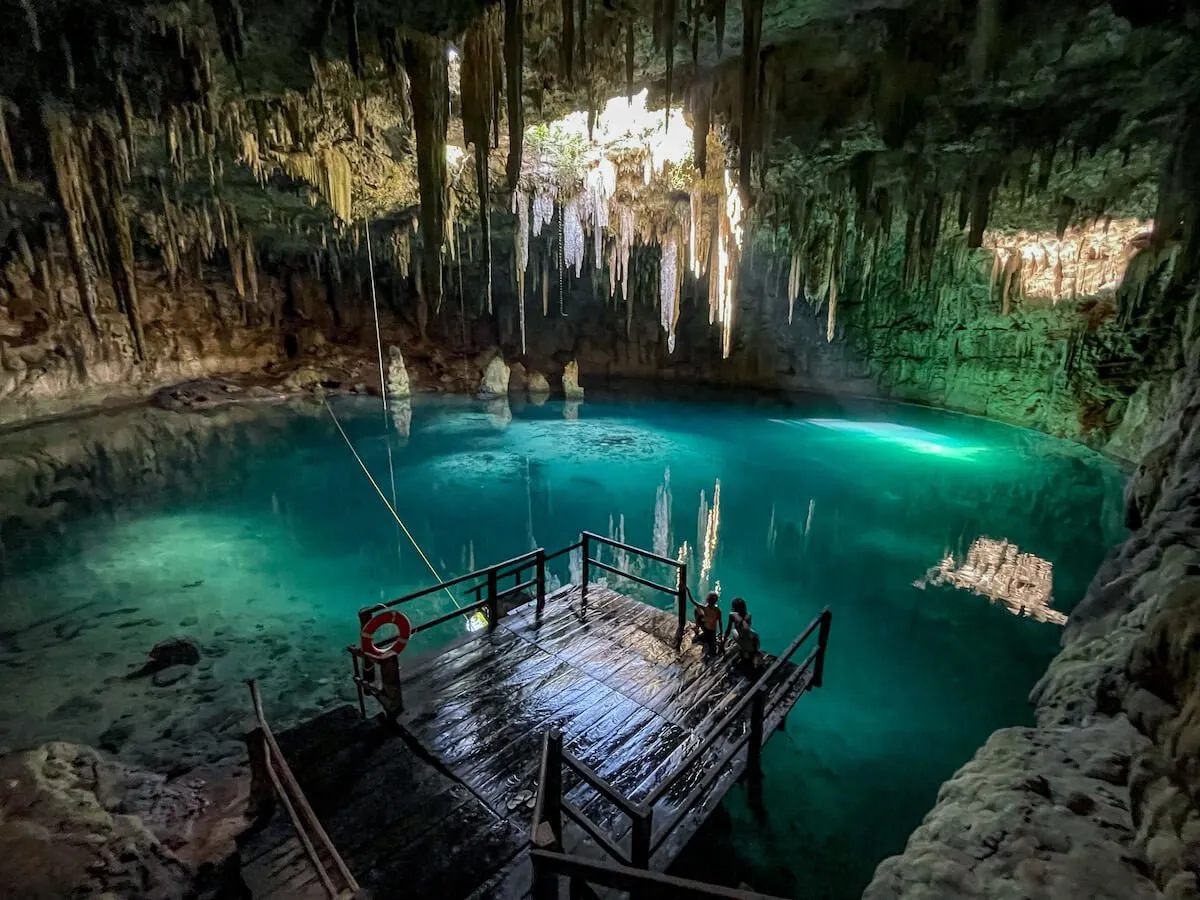
Dark. Cool. Alive. Bats flitted overhead, a reminder that we had entered their domain. Stalactites hung like ancient daggers, nature’s slow, deliberate masterpiece, shaped drop by drop over thousands of years. The air was thick with the scent of damp earth. It was breathtaking, a little eerie, and undeniably humbling as we descended into the shadows and finally into the cold, impossibly clear water below. And yes, it was absolutely worth it.


What’s the Deal with Cenotes?
Here’s where it gets wild. The Yucatán Peninsula is basically one giant slab of limestone. No rivers, no streams, just an endless expanse of jungle. But beneath the surface lies a sprawling labyrinth of freshwater caves and underground rivers carved over millions of years. The stars of this system are cenotes.
They’re sinkholes, born when limestone ceilings collapse, exposing the crystalline water below. Some are open-air pools perfect for Instagram, while others, like Choj-Ha, are hidden underground and feel like something Indiana Jones would stumble into.
Here’s a fun fact: About 65 million years ago, an asteroid the size of a small city slammed into this region, wiping out the dinosaurs and leaving behind the Chicxulub crater. That same cataclysm created the fractures that became cenotes. So when you are swimming in one, you are not just cooling off. You are floating in the aftermath of an extinction event.
For the Maya, cenotes were far more than water sources. They were sacred. These natural sinkholes were believed to be gateways to the underworld, Xibalba, where spirits wandered and gods dwelled. At Choj-Ha, el jefe, speaking in Mayan, explained how these places remain deeply significant to this day. To them, a cenote is not just a hole in the ground. It is a portal to something greater, a connection to their history and culture.


The Descent
Walking down into Choj-Ha felt like stepping through a crack in time. The light dimmed, the temperature dropped, and the cave swallowed us whole. The only sounds were the drip of water, the flutter of bat wings, and our hushed wows. The water was pure magic, impossibly clear and cold, the kind that shocks you at first but feels like salvation after the heat above. Every so often, a fish darted up from the depths, curious about the clumsy humans splashing into its world. The first time one brushed against my feet, my heart skipped a beat. I had not expected fish, and for a moment, my mind conjured something much bigger lurking below. Floating there, staring up at stalactites formed back when mammoths roamed, I could not help but feel small—in the best way possible.


Why You Need to Go
Cenotes are not just swimming holes. They are time capsules. They hold the stories of ancient civilizations, the fingerprints of a planet-altering asteroid, and the quiet awe of nature doing its thing. Whether you are diving into famous spots like Dos Ojos or venturing into hidden gems like Choj-Ha, the experience will leave you wanting more.
But here is the deal. If you want more than just a photo op, go find the secret ones. The ones without parking lots or inflated ticket booths. The ones that make you feel like you are in on something special.
We left Choj-Ha grinning from ear to ear. It was not just a swim. It was one of those first-time moments that stays with you long after the trip is over.
So next time you are in the Yucatán, take that dirt road and look for the faded signs. You will leave with a story.
let curiosity lead the way


Comments